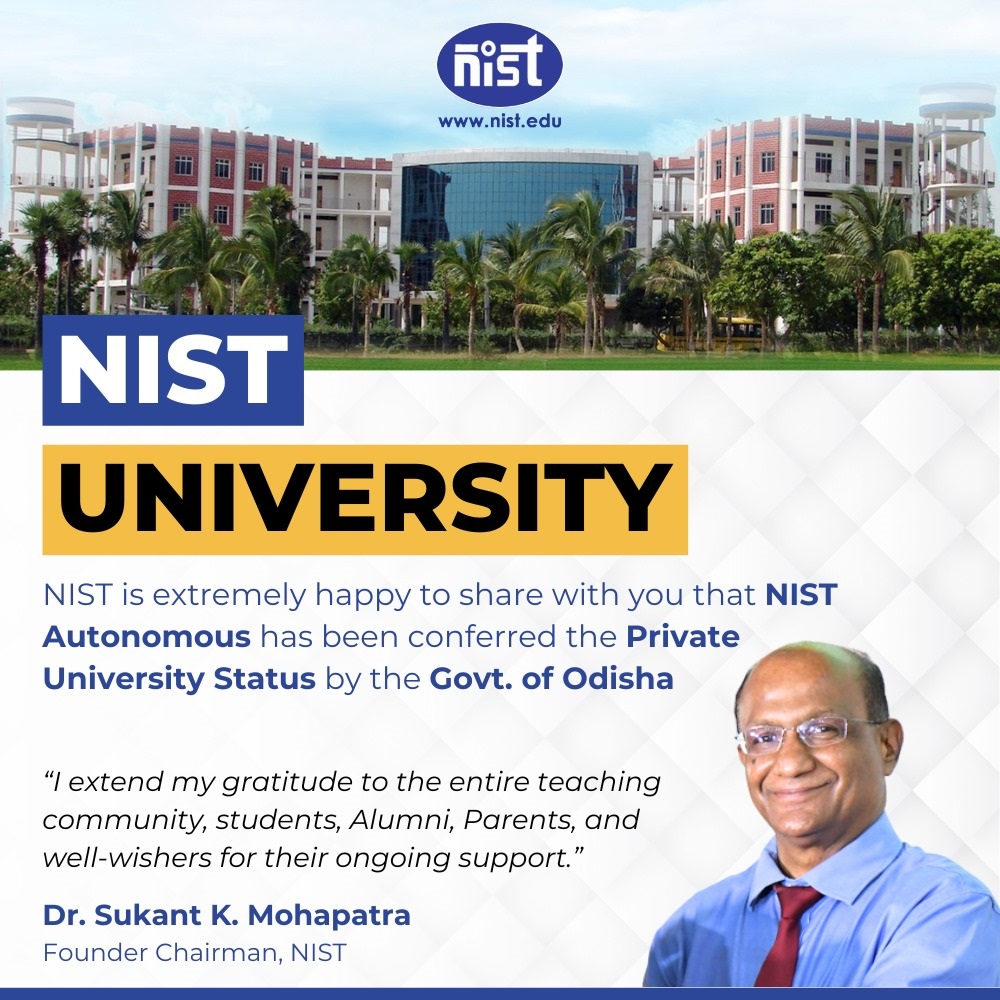
NIST UNIVERSITY
Institute Park, Berhampur, Odisha-761008, India

DEPT. OF COMPUTER APPLICATIONS

Vision

To be a center of excellence in computer education, research, and entrepreneurship, fostering future-ready computer professionals who can leverage the power of computing for solving real-world problems and drive digital transformation in the making of a better society

Mission

  • M1: To deliver high-quality academic curricula that blend theoretical knowledge with practical skills in computing, programming, and emerging technologies.
  • M2: To promote research culture by encouraging faculty and students to engage in innovative projects, publications, and develop cutting-edge solutions to real-life problems.
  • M3: To strengthen industry-academia collaboration with hands-on exposure, internships, projects development skills aligned with market trends and to instill professional ethics for enhancing employability

1100+

STUDENTS GRADUATED FROM THE DEPARTMENT TILL DATE

500+

WORTH OF INDUSTRIAL CONSULTING DONE TILL DATE

300+

STUDENTS TRAINED AND CERTIFIED IN SKILLED COURSES BY THE DEPARTMENT IN LAST 3 YEARS.

100+

Research Publications in referred Journals and9 Books Published by department faculty

7

Centers of Excellence in collaboration with industries

PROGRAMME OBJECTIVES

  • PEO-1: Professional Competence: To prepare graduates with strong theoretical foundations and practical skills in computer applications, enabling them to excel in industry, academia, research, and entrepreneurship.
  • PEO-2: Problem-Solving and Innovation: To cultivate the ability to analyze complex real-world problems, design effective computing solutions, and innovate using emerging technologies in IT and allied domains.
  • PEO-3: Lifelong Learning and Adaptability: To instill a culture of continuous learning, adaptability, and up-skilling, equipping graduates to meet evolving technological challenges and global demands.
  • PEO-4: Ethics and Leadership: To develop ethically responsible professionals with leadership qualities, teamwork, communication skills, and a commitment to societal and environmental responsibilities.
  • PO1 (Foundation Knowledge): Apply knowledge of mathematics, programming logic and coding fundamentals for solution architecture and problem solving.
  • PO2 (Problem Analysis): IIdentify, review, formulate and analyze problems for primarily focusing on customer requirements using critical thinking frameworks.
  • PO3 (Development of Solutions): Design, develop and investigate problems with as an innovative approach for solutions incorporating ESG/SDG goals.
  • PO4 (Modern Tool Usage): Select, adapt and apply modern computational tools such as development of algorithms with an understanding of the limitations including human biases.
  • PO5 (Individual and Teamwork): Function and communicate effectively as an individual or a team leader in diverse and multidisciplinary groups. Use methodologies such as agile.
  • PO6 (Project Management and Finance): Use the principles of project management such as scheduling, work breakdown structure and be conversant with the principles of Finance for profitable project management.
  • PO7 (Ethics): Commit to professional ethics in managing software projects with financial aspects. Learn to use new technologies for cyber security and insulate customers from malware
  • PO8 (Life-long learning): Change management skills and the ability to learn, keep up with contemporary technologies and ways of working
  • PSO1: Apply standard Software Engineering practices and strategies in real-time software project development using open-source programming environment or commercial environment to deliver quality product for the organization success.
  • PSO2: Design and develop computer programs/computer-based systems in the areas related to algorithms, networking, smart web design, Android app design, cloud computing, IoT and big data, Machine learning, data analytics of varying complexity
  • PSO3: Acquaint with the contemporary trends in industrial/research settings and thereby innovate novel solutions to existing problems

LABORATORIES

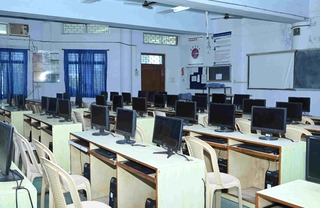
  • Computer Network Lab
  • Operating System Lab
  • Database Engineering Lab
  • Data Structure and Algorithm Lab
  • Problem Solving and Programming Lab
  • Data Science and Machine Learning Lab
  • Multimedia and Game Design Lab
  • CUDA Server
  • NVIDIA GPUs

RESEARCH AREAS

The faculty members and students of School of Computer Science do their research work and publishing their work in international and national Journals and conferences in the following areas such as HiPC, GRID Computing, Big Data Analytics, Cloud Computing, Computer Security, WSN, Multimedia, Computer Vision and Image Processing, Computational Intelligence, Software engineering, Data Mining and Machine Learning etc. A number of student RAships and Summer Internships are available.

Research_R&D

The faculty and students of the department are involved in R & D and Industrial Consulting actively in the respective area of interest. A number of student RAships and Summer Internships are available in the department. Some of the major research and consulting outcomes are
No of student publications: 45+

Research_Training

The department provides skilled based industrial courses to improve employability of the students during winter and summer break. The following courses are available for the students.

  • C++ Associate Professional Programming with STL (2018/CAPP)
  • Certification Course Cisco Certified Network Associate (2018/CCNA)
  • Certification Course Introduction to ORACLE 11g:SQL [Exam -- 1Z0-051] (2018/ORA)
  • Internet of Things (2018/IOT)
  • Python Programming Language (2018/PPL)

FACULTY

SYLLABUS


The Computer Applications program is designed to provide comprehensive knowledge in computer science and its diverse applications to meet the growing demands of the IT industry. The Department of Computer Applications is organized into specialized subgroups such as Computer Theory and Programming Languages, Software Engineering and Application/System Development, and Artificial Intelligence and Computer Vision. In today’s era of rapid technological advancement, computers and microprocessors have become integral to society, with applications ranging from household appliances to satellite communication systems. The curriculum emphasizes a balanced approach to theoretical foundations, mathematical concepts, and practical implementation. The program includes in-depth study of English communication, mathematics, statistics, and advanced computing. Core subjects include Computer System Architecture, Data Structures and Algorithms, Programming Languages, Database Management Systems (RDBMS), Computer Networks (LAN, WAN, Internet), Artificial Intelligence, Computer Vision, Computer Graphics, Optimization Techniques and Software Engineering. The syllabus also software development methodologies, and system support technologies. Keeping in view the increasing demand for computer professionals, the program ensures strong foundational knowledge along with hands-on experience to prepare students for careers in software development, research, networking, and emerging technologies.